Sunday, 10 July 2016

Perfect Square - Michael Hall

In challenging times, children need to learn to be resilient and this book is a perfect introduction for children to learn about adapting and facing difficulties with confidence.

Square is perfect at the start of the book with four corners and straight lines, until someone rips it up, punches holes in it, shreds it, snips bits away etc. At each challenge Square remodels itself; when poked full of holes it turns in to a babbling fountain and when torn in to scraps it turns in to a flower garden. 

This book is truly inspirational and I am using it in KS2 classes to teach children to think creatively and find solutions when things go wrong. 


Sunday, 3 July 2016

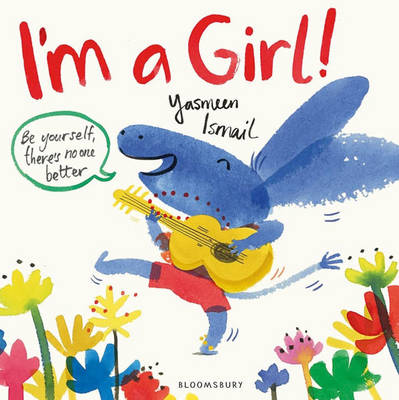
I'm a girl: Yasmeen Ismail

I'm a Girl! (Paperback)

This book is a fantastic tool to challenge the gender stereotypes fed to children about how to be and how to behave as they grow up. It is assumed by people around her that the main character is a boy; she wins races, she is brave and noisy and all through the story she is refereed to as a boy, to which she always replies, "I'm a girl!"

A child is told at one point that, "Dolls are for girls," 
"No they're not!" the child replies.

At the end of the story, the girl meets a boy who says, "I'm a boy! Being us is brilliant!" and the pair join in a song together, agreeing that there's no one else they'd rather be; "We're us!" conclude the children.

This is a great way to reassure young children that we are all different and that's ok. Girls are great and boys are great too, and children can be who they are regardless of their gender or gender identity.


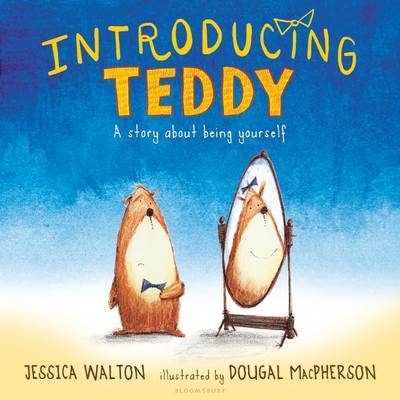
Introducing Teddy - Jessica Walton and Dougal MacPherson

Introducing Teddy (Paperback)

Errol and Thomas the Teddy play together every day until one day when Thomas doesn't feel like playing. Errol encourages Teddy to tell him what's wrong but Teddy is afraid Thomas will no longer be his friend. When Thomas convinces Teddy to speak up, Teddy says, "I need to be myself, Errol. In my heart, I've always known that I'm a girl teddy, not a boy teddy." 
Thomas doesn't care because, "all that matters is that you are my friend".

Thomas and Teddy call their friend Eva and introduce her to Teddy's new name, Tilly. The three go and play together.

This is a super book to explore transgender identity and acceptance. The characters are fantastic role models, making the transition during the story as uncomplicated as possible and showering the focus character with support and positive affirmation.

Every school needs this book.

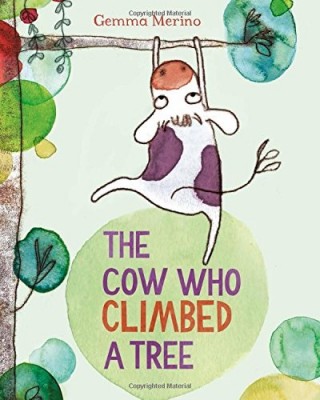
The cow who climbed a tree: Gemma Merino

The Cow Who Climbed a Tree (Paperback)

Tina the cow thinks differently to other cows and likes to try out new things. This is a great tale to use when teaching children about why some people are afraid of difference. The other cows just chew grass all day but Tina wants to try something different. The story encourages independent thinking and also assertiveness as Tina encourages the other cows to be brave and follow their hearts.
It has a great ending as the other cows realise it's OK to listen to new ideas and feel unafraid. 
I am using this book to encourage children to question and think creatively. 

Saturday, 18 June 2016

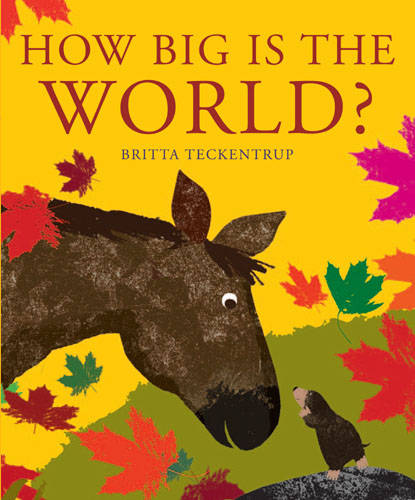
How Big Is The World - Britta Teckentrup


How Big is the World? (Paperback)

I used this book the week after the attacks on LGBT people in Orlando, in both assembly and later as the basis for a PSHE lesson. Mole asks various animals how big the world is; the spider believes the world is as big as her web and the horse believes the world to be as big as his field. The whale, however, takes Mole on a journey across the globe to discover the huge diversity of places that can be visited. The message in the story is that the world is as big as you want it to be. 

I'm linking this to prejudice and encouraging children to look for diversity, meet different people and be open to new experiences. Imagine if you stayed in the same place all your life, talking only to people who had the same skin as you, practised the same faith as you or spoke your language; your world would be tiny like spider's web. It's great to travel beyond your web; meet different people, hear different ideas and exchange dialogue. Its how we learn and accept each other.

We are not afraid of difference or of diversity. We want to meet different people in different places and listen to different stories. That's why we say there are No Outsiders; everyone is welcome in our world and our job is to spread that message.

Saturday, 13 February 2016

Jamie by Olly Pike


Great to have a children's picture book where a character transitions during the story. This is a wonderful vehicle to use when discussing transgender awareness with children; use the book to promote a school ethos where everyone is safe and there are no outsiders.

Olly Pike uses the Cinderella fairy tale as a base for a story where Jamie (Cinderella) feels something isn't right;

"You see, how Jamie felt inside didn't match up with what she saw in the mirror, and oh how she wished it would"

I love that Jamie transitions without help from the Fairy Godmother; there is no magic involved, it's a tale of empowerment. Looking at this book from a teaching perspective, the way pronouns are used on the page where Jamie finally understands who he is, provides perfect stimulus for a class discussion. This is also a great text to use in Guided Reading.

There is a theme running through Pike's stories where the characters worry about factors other than being gay or being trans and these provide fantastic conclusions, modelling acceptance to children. Jamie chooses at the end of the tale to tell the princess his own story and she is only concerned about how a mouse cut his hair! Brilliant!

Buy Jamie by Olly Pike from here 

Wednesday, 20 January 2016

Pig In The Pond by Martin Waddel

"Pig In The Pond" is a great book to introduce the concept of No Outsiders to young children in Reception or in Y1. I used the book in assembly this week and talked about how the pig felt when he was out of the pond and no one offered to move up and let him in. When he first jumps in everyone else stays out but the farmer saves the day, joining the pig and then inviting all the other animals in too. The last page shows all the animals together in the pond; an image that shows on the farm there really are no outsiders! The children loved it.


Sunday, 11 October 2015

Are you a boy or are you a girl? by Sarah Savage and Fox Fisher

page1

This book is a fantastic resource for introducing the concept to children that not everyone is defined by the gender they were assigned at birth. The character in the story takes part in activities successfully without ever defining themselves by gender. It also gives a good example of adult support when another child questions the lead character.

This is a wonderful and positive celebration of transgender awareness. Highly recommended.
Buy the book here: http://sarah-savage.com/product/book/

Monday, 3 August 2015

The Whisperer by Nick Butterworth

I've been using "The Whisperer" for about ten years in Primary classrooms to teach about accepting diversity and difference and it is one of my favourite stories to use in Year 5 and 6. The story can also be used to discuss gang culture, family expectations and why and how two people fall in love. In short, it makes for a great basis to a PSHE lesson.

The story focuses on two gangs of cats and is narrated by a rat who discovers by spreading rumours about the offspring of the two rival gang leaders falling in love, he can deflect attention away from him. This also gives us a fantastic opportunity to discus why people spread rumours and the effect on a community.

The story has a fantastic ending where the two rival gang leaders change their behaviour and also the rumour-spreading rat has his comeuppance.

A super story for upper key stage 2. I cannot recommend this enough.

A lesson plan using this story is included in forthcoming resource, "No Outsiders in our school: Teaching the Equality Act in Primary Schools." Available soon from www.speechmark.net

Picnic in the park by Joe Griffiths, Tony Pilgrim, Lucy Pearce

"Picnic in the park" is a great way to demonstrate the No Outsiders ethos where no one is left out and everyone is made to feel welcome. Jason has a birthday picnic and each page shows a different family arriving; by the end there is a mix of gender, race, disability, sexual orientation, age.

The focus for me when I use this in Year 2,3 and 4 classes is that Jason does nor turn anyone away; everyone is different in some way and everyone is welcome; "A bit like in our school," I say, "Where there are no outsiders!"

When reading this in Year 2 classes we have our own picnic and I ask children to come to a picnic rug in a family of their choosing. We make sure everyone is welcome; in this way we also talk about British Values where society is diverse and furthermore we like living alongside people and families who are diverse. 

Red Rockets and Rainbow Jelly by Sue Heap and Nick Sharratt


"Red Rockets and Rainbow Jelly" is a perfect picture book to start equalities education in Reception class. Nick and Sue like different things on every page but at the end they still like each other. I use this in EYFS and Year 1 to demonstrate that we can like different things yet we can still be friends.

This ethos underpins all of the equalities work I do in schools and I always begin with this book when training teachers who may be feeling a little nervous about what equalities education is. The book is simple, but the simplicity makes it effective. The beautiful illustrations and blocks of colour make it engaging for young children. Every early years classroom needs this book in their book corner!


Nanny Fox by Georgie Adams and Selina Young

"Nanny Fox" provides teachers with a great vehicle to discuss diversity and difference and promote individuality. When Fox announces to his family that he wishes to look after chicks on a farm rather than eat them, his family is horrified because that's not what foxes do!

Fox wins through in the end, demonstrating that not all foxes are the same. I use this in Year 3 and 4 to discuss people being unique and not always conforming to expectations.

The odd egg by Emily Gravett


I use "The odd egg" to talk about families being different and parents being proud of their different children.

All the birds have an egg except Duck, who goes to find one. While the other eggs gradually hatch, Duck's egg stays whole till the last page where a completely different animal suddenly appears. I focus on the final image where the baby animal calls Duck "Mama" illustrating a different family but one filled with love.

The exciting and humorous illustrations make this book a favourite and I use it in classes from Year 1-5.

10,000 dresses by Marcus Ewert


10,000 dresses is a great book through which to explore gender expectations and roles. Bailey dreams of wearing dresses and despite Mum and Dad and brother saying Bailey is a boy and should not wear a dress, we never find out what gender Bailey identifies as. At the end Bailey makes a friend who does not label either way and doesn't care; together they create the most fabulous dress Bailey could ever want.

I've used this book to talk about including children who may be transgender in our school. Would Bailey be welcome at our school? Of course! We are all different at our school and we welcome everyone!

Wednesday, 8 July 2015

Prince Henry- Olly Pike (Pop@n@Olly)


I have started using this in Year 2 and 3 in my own school because it's a great story which demonstrates two men can get married without any reaction from those around. However there is so much more to the story, which also presents an opportunity to discuss whether laws that are unfair should be changed, and shows a character choosing not to get married after all.

Olly Pike is engaging and fun to watch and my class loved this. There are some great resources on www.popnolly.com and I highly recommend taking a look.

Prince Henry is available in book form here

Monday, 6 July 2015

And Tango Makes Three- Justin Richardson and Peter Parnell


"And Tango Makes Three" is a wonderful book to teach children about different families. Roy and Silo are two male penguins who are in love and when the zoo keeper sees the couple copy the nest making behaviour exhibited by the other couples in the Penguin house, he gives them an egg.

Tango becomes the first baby penguin in the zoo to have two daddies. This is a true story and you can see Roy, Silo and Tango if you visit New York City Zoo.

This was one of the first books I used that explored same sex relationships and different families and was part of the No Outsiders book list back in 2006. I am overjoyed to see it being re-published in 2015.

See lesson plans for this book in
"Emotional Health and well being: 100+ lesson plans for the primary classroom" by Andrew Moffat (Speechmark 2012)
and
"No Outsiders in our school: Teaching the equality act in primary schools" (Speechmark 2015)

Frog Is Frog - Max Velthuijs

Frog finds lots of things he can't do; he can't fly like Duck, bake cakes like Pig or read books like Hare. Frog feels useless; "I'm just an ordinary green frog," he sobs.

Hare helps Frog to be proud of who and what he is and by the end of the story, Frog understands the world is full of different animals with different skills. He feels lucky to be Frog.

I use this book to explore difference and promote an acceptance of who we are. There are some things I can't do but at the same time there are some things I am good at. We want children to like the person they are and this story is a great way to reinforce that.

Wednesday, 1 July 2015

This is our house- Michael Rosen


Perfect for introducing work on equalities in a Primary school and setting out the ethos where there are no outsiders in our school. George refuses to let children join his game and demonstrates discrimination by using their characteristics as the reason; twins, people who wear glasses and people who like tunnels are all denied entry in to his house. By the end of the story George realises that his house is for everyone!

Also great for assemblies. I cannot recommend this book enough.

"This is our house" is included in the book list for "No Outsiders in our school: Teaching the Equality Act in primary Schools" by Andrew Moffat, available soon from Speechmark.